
APP-PHI Projects
The Appalachian Public Health Innovation Lab (APP-PHI) is involved in many projects and collaborations to support our mission of increasing public health capacity across Western North Carolina. Our initiatives span maternal and family health coalitions, workforce development micro-learning platforms, early career professional pathways, and emergency response efforts. As our regional work continues to grow, we are always open to building new partnerships and collaborative opportunities to further strengthen community resilience in rural Appalachia.
Appalachian Medical Reserve Corps (APP MRC)
Project Type: Community Resilience and Emergency Preparedness
The mission of the Appalachian Medical Reserve Corps (APP MRC) is to recruit and train volunteers in order to better support rural public health operations and bolster community resilience and preparedness.
APP-PHI Corps
Project Type: Community Resilience and Emergency Preparedness
APP-PHI Corps is a pipeline initiative designed to connect public health students and career-changing professionals with meaningful opportunities in public health service. This program integrates service, community engagement, practice, and research to address critical public health challenges while preparing participants for impactful careers in the field. APP-PHI Corps emphasizes experiential learning, fostering a commitment to community service and health equity. Members engage in projects that strengthen public health infrastructure, promote health education, and address pressing issues in the communities they serve. This initiative not only supports individual professional growth but also contributes to building a stronger, more resilient public health workforce.
The program is supported by five dedicated faculty members and a Graduate Student Program Manager, ensuring robust mentorship and guidance. It includes 30 AmeriCorps members, representing a diverse group of individuals such as:
- Undergraduate students completing internship requirements for their bachelor’s degrees
- Recent graduates beginning their careers in public health
- Professionals in the field seeking hands-on experience and exploring a career transition

Health Policy Research Consortium
Project Type: Innovative Research and Policy Scholarship
Vision: Resilient, thriving, and just communities throughout Western North Carolina with equal opportunity to access health and wellbeing.
Mission: The Western North Carolina Health Policy Research Consortium leverages research and evaluation resources, nurtures capacity and innovation, and finds creative solutions with community partners to inform policies that improve health outcomes for the people in WNC.
Values:
- Collaboration – listening with humility, curiosity, and respect as we foster relationships and build partnerships to advance this work
- Community-Driven – including and amplifying community voice and recognizing that community members are experts of their own lived experience
- Justice – intentionally working towards ensuring power and systems that work for everyone
- Open Communication and Transparency – sharing of data, findings, and challenges openly and honestly
Aging Well: High Country Older Adult Mental Health Initiative
Project Type: Community Resilience and Emergency Preparedness
The Aging Well High Country Older Adult Mental Health Initiative aims to significantly enhance the mental and behavioral health of older adults in Western North Carolina. This region faces profound challenges, including high poverty rates, geographic isolation, limited access to healthcare services, and cultural barriers that hinder older adults from seeking and receiving mental health support. This initiative represents a collaborative effort among key organizations, including the High Country Area Agency on Aging, Senior Centers in each county, Parent to Parent Family Support Network, Public Health AmeriCorps, and the Appalachian Medical Reserve Corps. Together, these partners will implement a sustainable population approach to mental health for older adults through mental health and psychological first aid interventions, ensuring that services are accessible, culturally sensitive, and tailored to the unique needs of this population.
March 2026 Update: The Older Adult Specialized Module of the online RAPID PFA [link] is available. All are invited to take the online training. The synchronous (in-person or via Zoom) Older Adult RAPID PFA training is available for any individuals or groups. If you are interested in scheduling a training for your group or joining a training, don’t hesitate to get in touch with Jennifer Schroeder Tyson at tysonjs@appstate.edu.
Growing Well: Appalachian Innovative Approaches 2.0
Project Type: Community Resilience and Emergency Preparedness
Innovative Approaches 2.0 has two primary focuses: Transition of care and emergency preparedness for Children and Youth with Special Healthcare Needs (CYSHCN) .
- Transition of Care: Innovative Approaches 2.0 will emphasize the importance of sufficient preparation for CYSHCN to receive appropriate health care as they transition into adulthood. This will rely on macro communication with healthcare providers throughout NC, training on specific models (C-MIST for health care plans.
- Emergency Preparedness: GIS mapping, distribution site, and CBPAR to assess the needs of CYSHCN.
Rural Translation of Interventions
Project Type: Innovative Research and Policy Scholarship
Every population is unique. Each group has their own strengths, challenges, supports, and needs. APP-PHI conducts research to understand the best practices, appropriate frameworks, and effective systems to use and part of their responsibility is to enter spaces throughout Western North Carolina with cultural humility. This allows APP-PHI to make interventions suitable to the unique attributes of the population and holistically address specific needs with consideration of the rural southern Appalachian culture.
Preparedness Quality Improvement (PQI)
Project Type: Innovative Research and Policy Scholarship
APP-PHI is based on principles of competency in the field and integrity in their actions. The Preparedness Quality Improvement is a tool and perspective such as using After Action Reviews to allow the team to evaluate their systems, processes, programs, and initiatives. The Preparedness Quality Improvement encourages critical reflection based on objectivity.
Preparedness Quality Improvement uses the 15 capabilities established by the CDC to use as the standards for public health preparedness planning. It is a process of challenging the effectiveness of processes, programs and initiatives in place or being planned under APP-PHI to encourage critical improvements and ensure the quality and effectiveness of the programs.
Health Communication
Project Type: Innovative Research and Policy Scholarship
APP-PHI aims to make healthcare accessible to all in Western North Carolina. Health communication is critical in these efforts.
- Machine Modeling – Communication Mapping for Public Health Emergencies: Machine modeling focuses on communication mapping for public health emergencies. This research equips organizations with the appropriate lines of communication to help those in the area when public health emergencies arise.
- Health Literacy and Behaviors amongst Health Professionals: APP-PHI stresses the importance of health care workers and others in this field are competent, ethical in their actions, and are able to effectively communicate to those they are serving . Literature reviews and case studies on rural health and emergencies are utilized in this endeavor and a systematic literature review was conducted and entitled Health Information Seeking and Sharing Behaviors of Health Professionals to Inform Future Expansion of Training on Effective Health Communication.
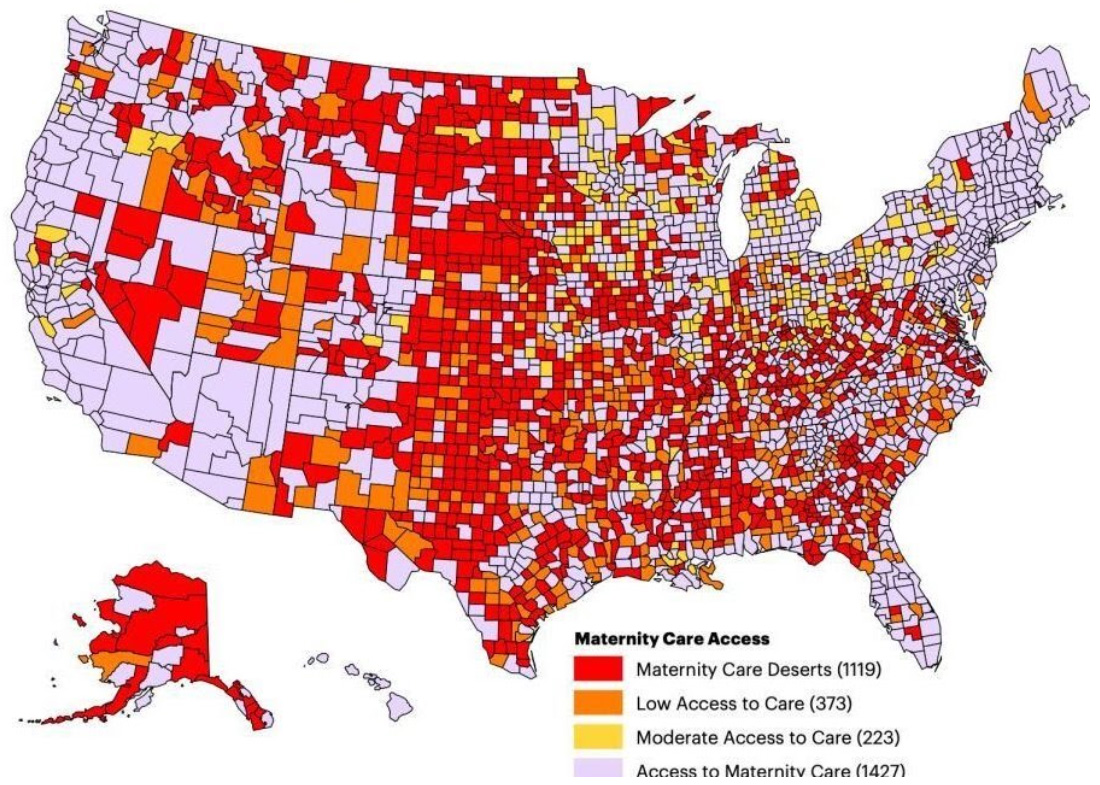
Obstetric Desert Mapping
Project Type: Innovative Research and Policy Scholarship
A team at App State has assessed the accessibility of health care, particularly obstetric care, among individuals living in Western North Carolina. Obstetric/Maternal care deserts are defined as counties with no OB/GYN, certified nurse midwife providers, or hospitals offering obstetric care. Research was conducted in which the team investigated the severity of the lack of access to maternal care in select counties. The research has begun to map out these deserts in Western North Carolina to present the needs, the impacts, and possible ways to address the deserts.
Hurricane Helene Survey
Hurricane Helene (2024) brought record-breaking rainfall and destruction to rural Western North Carolina. Estimates suggest 20+ inches of rain in 24 hours. Widespread infrastructure failures isolated communities and contributed to nearly 100 deaths. The hurricane also caused unprecendented mental health challenges among community volunteers. Despite this devastation, the storm prompted massive grassroots response from local organizations working to deliver aid, clear debris, reconnect residents, and build unified resilience in the storm’s aftermath.
In a survey conducted by the REACH Lab through Appalachian State’s Department of Geography and Planning, 408 community members were surveyed 6-8 months after Hurricane Helene. Explore the data and findings related to mental health and volunteers.
GIS Mapping
Following Hurricane Helene, APP-PHI utilized spatial mapping tools to analyze community impacts, track recovery needs, and support relief efforts across Western North Carolina. By integrating geographical data with community-driven research and regional partnerships, this project helps visualize emergency operations, identify priority areas, and build long-term public health disaster resilience in rural Appalachia.
Trainings
RAPID Psychological First Aid (RAPID PFA)
RAPID Psychological First Aid (RAPID PFA) is an intervention specifically designed to guide individuals through the evidence-based and validated Psychological First Aid (PFA) training. PFA is a humane, supportive response to a fellow human being who is suffering and who may need support. It is meant to be utilized by individuals without formal mental health training, enabling them to effectively address surging mental health levels following a disaster.
Emergency Preparedness and Response Undergraduate Certificate
The Emergency Preparedness and Response certificate is offered at the undergraduate and graduate levels at App State with the intent to train learners in the specialized area of public health emergency preparedness and response. This certificate would position learners to be hirable in local health agencies as preparedness leaders. This certificate will also procure a pre-trained body of student professionals to assist the university and community in responding to public health emergencies and serve on committees focused on preparedness and response.
Partnering with Gillings on the Ground
Gillings on the Ground (GoG) is a free, two-semester training program led by the Gillings School of Global Public Health at UNC Chapel Hill. Twenty two students are currently enrolled through App State in GoG to learn more about disaster response and emergency management.